Erik Wetterskog*, Alice Klapper, Sabrina Disch, Elisabeth Josten, Raphaël P. Hermann, Ulrich Rücker, Thomas Brückel, Lennart Bergström and German Salazar-Alvarez*
Nanoscale (2016)
DOI: 10.1039/C6NR03776C
Abstract:
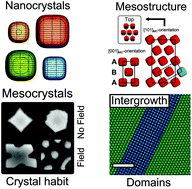
A precise control over the meso- and microstructure of ordered and aligned nanoparticle assemblies, i.e., mesocrystals, is essential in the quest of exploiting collective material properties for potential applications. In this work, we produce evaporation-induced self-assembled mesocrystals with different mesostructures and crystal habits based on iron oxide nanocubes by varying the nanocube size and shape, and by applying magnetic fields. A full 3D characterization of the mesocrystals was performed using image analysis, high-resolution scanning electron microscopy and Grazing Incidence Small Angle X-ray Scattering (GISAXS). This enabled structural determination of e.g. multi-domain mesocrystals with complex crystal habits, and the quantification of interparticle distances with sub-nm precision. Mesocrystals of small nanocubes (l = 8.6 – 12.6 nm) are isostructural with a body centred tetragonal (bct) lattice whereas assembly of the largest nanocubes in this study (l = 13.6 nm) additionally form a simple cubic (sc) lattice. The mesocrystal habit can be tuned from a square, hexagonal to star-like and pillar shapes depending on the particle size, shape, and the strength of the applied magnetic field. Finally, we outline a qualitative phase diagram of the evaporation-induced self-assembled superparamagnetic iron oxide nanocube mesocrystals based on nanocube edge length and magnetic field strength.
2016-07-13
2016-07-09
3D visualization of iron oxidation state in FeO/Fe3O4 core-shell nanocubes from electron energy loss tomography
Pau Torruella, Raul Arenal, Francisco de la Peña*, Zineb Saghi, Lluís Yedra, Alberto Eljarrat, Lluis Lopez-Conesa, Marta Estrader*, Alberto López-Ortega, German Salazar-Alvarez, Josep Nogués Sanmiquel, Caterina Ducati, Paul A. Midgley, Francesca Peiró, and Sonia Estrade*
Nano Letters, 16 (2016) 5068-5073
DOI: 10.1021/acs.nanolett.6b01922
Abstract:
The physicochemical properties used in numerous advanced nanostructured devices are directly controlled by the oxidation states of their constituents. In this work we combine electron energy-loss spectroscopy, blind source separation, and computed tomography to reconstruct in three dimensions the distribution of Fe2+ and Fe3+ ions in a FeO/Fe3O4 core/shell cube-shaped nanoparticle with nanometric resolution. The results highlight the sharpness of the interface between both oxides and provide an average shell thickness, core volume, and average cube edge length measurements in agreement with the magnetic characterization of the sample.
Abstract:
The physicochemical properties used in numerous advanced nanostructured devices are directly controlled by the oxidation states of their constituents. In this work we combine electron energy-loss spectroscopy, blind source separation, and computed tomography to reconstruct in three dimensions the distribution of Fe2+ and Fe3+ ions in a FeO/Fe3O4 core/shell cube-shaped nanoparticle with nanometric resolution. The results highlight the sharpness of the interface between both oxides and provide an average shell thickness, core volume, and average cube edge length measurements in agreement with the magnetic characterization of the sample.
2016-04-28
[Workshop] Structure elucidation from molecular to macroscopic level
Functional Hybrid Materials: structure elucidation
from molecular to macroscopic level – A workshop and training school
Speakers and lecturers
Thomas Albrecht-Schmitt,
Florida
State University
Zoltán Bacsik,
Stockholm
University
Lennart Bergström,
Stockholm University
Luís Carlos,
University of Aveiro
Marie-Helene Delville, Institute
of Chemistry of Condensed Matter of Bordeaux
Thierry Darmanin, University
of Nice
Niklas Hedin, Stockholm University
Andrew Ken Inge, Stockholm University
Nicholas Kotov, University
of Michigan
Carita Kvarnström,
University
of Turku
Danielle Laurencin, Institute Charles Gerhard of Montpellier
Jean-Marie Nedelec, Institute
of Chemistry of Clermont-Ferrand
Tomás Plivelic, MAX IV synchrotron
Meital Reches,
Hebrew University
of Jerusalem
João Rocha,
University of Aveiro
Nico Sommerdijk,
Eindhoven University of Technology
Andreas Taubert,
University of Potsdam
Wei Wan, Stockholm University
Max Wolff, Uppsala University
Xiaodong Zou,
Stockholm University
The school aims at giving an
overview of structure elucidation techniques relevant for the
design of new hybrid materials. A recommendation of 1.5 ECTS will be given to
students attending all lectures and presenting a poster. Deadline registration April 30th, 2016.
Organizers
German Salazar-Alvarez, Stockholm University
Vadim Kessler, Swedish University of Agricultural
Sciences
Sponsored by:
2016-01-11
Thin Water Films at Multifaceted Hematite Particle Surfaces
Jean-François Boily, Merve Yeşilbaş, Munshi Md. Musleh Uddin, Lu Baiqing, Yulia Trushkina, and Germàn Salazar-Alvarez
Langmuir, 31 (2015) 13127–13137
DOI: 10.1021/acs.langmuir.5b03167
Abstract:
Mineral surfaces exposed to moist air stabilize nanometer- to micrometer-thick water films. This study resolves the nature of thin water film formation at multifaceted hematite (α-Fe2O3) nanoparticle surfaces with crystallographic faces resolved by selected area electron diffraction. Dynamic vapor adsorption (DVA) in the 0–19 Torr range at 298 K showed that these particles stabilize water films consisting of up to 4–5 monolayers. Modeling of these data predicts water loadings in terms of an “adsorption regime” (up to 16 H2O/nm2) involving direct water binding to hematite surface sites, and of a “condensation regime” (up to 34 H2O/nm2) involving water binding to hematite-bound water nanoclusters. Vibration spectroscopy identified the predominant hematite surface hydroxo groups (−OH, μ–OH, μ3–OH) through which first layer water molecules formed hydrogen bonds, as well as surface iron sites directly coordinating water molecules (i.e., as geminal η–(OH2)2 sites). Chemometric analyses of the vibration spectra also revealed a strong correspondence in the response of hematite surface hydroxo groups to DVA-derived water loadings. These findings point to a near-saturation of the hydrogen-bonding environment of surface hydroxo groups at a partial water vapor pressure of ∼8 Torr (∼40% relative humidity). Classical molecular dynamics (MD) resolved the interfacial water structures and hydrogen bonding populations at five representative crystallographic faces expressed in these nanoparticles. Simulations of single oriented slabs underscored the individual roles of all (hydro)oxo groups in donating and accepting hydrogen bonds with first layer water in the “adsorption regime”. These analyses pointed to the preponderance of hydrogen bond-donating −OH groups in the stabilization of thin water films. Contributions of μ–OH and μ3–OH groups are secondary, yet remain essential in the stabilization of thin water films. MD simulations also helped resolve crystallographic controls on water–water interactions occurring in the “condensation regime”. Water–water hydrogen bond populations are greatest on the (001) face, and decrease in importance in the order (001) > (012) ≈ (110) > (014) ≫ (100). Simulations of a single (∼5 nm × ∼ 6 nm × ∼ 6 nm) nanometric hematite particle terminated by the (001), (110), (012), and (100) faces also highlighted the key roles that sites at particle edges play in interconnecting thin water films grown along contiguous crystallographic faces. Hydroxo–water hydrogen bond populations showed that edges were the preferential loci of binding. These simulations also suggested that equilibration times for water binding at edges were slower than on crystallographic faces. In this regard, edges, and by extension roughened surfaces, are expected to play commanding roles in the stabilization of thin water films. Thus, in focusing on the properties of nanometric-thick water layers at hematite surfaces, this study revealed the nature of interactions between water and multifaced particle surfaces. Our results pave the way for furthering our understanding of mineral-thin water film interfacial structure and reactivity on a broader range of materials.
Langmuir, 31 (2015) 13127–13137
DOI: 10.1021/acs.langmuir.5b03167
Abstract:
Mineral surfaces exposed to moist air stabilize nanometer- to micrometer-thick water films. This study resolves the nature of thin water film formation at multifaceted hematite (α-Fe2O3) nanoparticle surfaces with crystallographic faces resolved by selected area electron diffraction. Dynamic vapor adsorption (DVA) in the 0–19 Torr range at 298 K showed that these particles stabilize water films consisting of up to 4–5 monolayers. Modeling of these data predicts water loadings in terms of an “adsorption regime” (up to 16 H2O/nm2) involving direct water binding to hematite surface sites, and of a “condensation regime” (up to 34 H2O/nm2) involving water binding to hematite-bound water nanoclusters. Vibration spectroscopy identified the predominant hematite surface hydroxo groups (−OH, μ–OH, μ3–OH) through which first layer water molecules formed hydrogen bonds, as well as surface iron sites directly coordinating water molecules (i.e., as geminal η–(OH2)2 sites). Chemometric analyses of the vibration spectra also revealed a strong correspondence in the response of hematite surface hydroxo groups to DVA-derived water loadings. These findings point to a near-saturation of the hydrogen-bonding environment of surface hydroxo groups at a partial water vapor pressure of ∼8 Torr (∼40% relative humidity). Classical molecular dynamics (MD) resolved the interfacial water structures and hydrogen bonding populations at five representative crystallographic faces expressed in these nanoparticles. Simulations of single oriented slabs underscored the individual roles of all (hydro)oxo groups in donating and accepting hydrogen bonds with first layer water in the “adsorption regime”. These analyses pointed to the preponderance of hydrogen bond-donating −OH groups in the stabilization of thin water films. Contributions of μ–OH and μ3–OH groups are secondary, yet remain essential in the stabilization of thin water films. MD simulations also helped resolve crystallographic controls on water–water interactions occurring in the “condensation regime”. Water–water hydrogen bond populations are greatest on the (001) face, and decrease in importance in the order (001) > (012) ≈ (110) > (014) ≫ (100). Simulations of a single (∼5 nm × ∼ 6 nm × ∼ 6 nm) nanometric hematite particle terminated by the (001), (110), (012), and (100) faces also highlighted the key roles that sites at particle edges play in interconnecting thin water films grown along contiguous crystallographic faces. Hydroxo–water hydrogen bond populations showed that edges were the preferential loci of binding. These simulations also suggested that equilibration times for water binding at edges were slower than on crystallographic faces. In this regard, edges, and by extension roughened surfaces, are expected to play commanding roles in the stabilization of thin water films. Thus, in focusing on the properties of nanometric-thick water layers at hematite surfaces, this study revealed the nature of interactions between water and multifaced particle surfaces. Our results pave the way for furthering our understanding of mineral-thin water film interfacial structure and reactivity on a broader range of materials.
2015-09-01
Controlled molecular reorientation enables strong cellulose fibers regenerated from ionic liquid solutions
Johan Sundberg, Valentina Guccini, Karl M.O. Håkansson, German Salazar-Alvarez, Guillermo Toriz, Paul Gatenholm
Polymer 75 (2015) 119-124.
DOI: 10.1016/j.polymer.2015.08.035
Highlights:
• Strong cellulose fibers spun from ionic liquid solution.
• Extrusion process simulated in silica based upon rheological measurements.
• Increased DO for fibers regenerated with ethanol stretched at high RH.
• Significant improvement of mechanical properties for re-oriented fibers.
• Mechanical properties comparable to commercially available fibers.
Abstract:
Cellulose is difficult to solubilize and undergoes thermal decomposition prior to melting. In recent years ionic liquids have been evaluated as solvents of cellulose. In the regeneration process the non-solvent governs the resulting material's crystallinity. Water adsorbs to amorphous cellulose, acts as plasticizer and lowers the Tg, hence the degree of crystallinity will affect the potential strain induced reorientation. We prepared regenerated cellulose fibers form ionic liquid using different non-solvents. The influence of shear forces upon cellulose chain alignment during extrusion was simulated in silica based upon rheological measurements. The regenerated fibers had different physical, morphological and mechanical properties. Molecular re-orientation in fibers induced by mechanical strain, at humidities above the Tg, resulted in much improved mechanical properties with the Young's modulus reaching 23.4 ± 0.8 GPa and the stress at break 504.6 ± 51.9 MPa, which is comparable to commercially available cellulose fibers.
Polymer 75 (2015) 119-124.
DOI: 10.1016/j.polymer.2015.08.035
Highlights:
• Strong cellulose fibers spun from ionic liquid solution.
• Extrusion process simulated in silica based upon rheological measurements.
• Increased DO for fibers regenerated with ethanol stretched at high RH.
• Significant improvement of mechanical properties for re-oriented fibers.
• Mechanical properties comparable to commercially available fibers.
Abstract:
Cellulose is difficult to solubilize and undergoes thermal decomposition prior to melting. In recent years ionic liquids have been evaluated as solvents of cellulose. In the regeneration process the non-solvent governs the resulting material's crystallinity. Water adsorbs to amorphous cellulose, acts as plasticizer and lowers the Tg, hence the degree of crystallinity will affect the potential strain induced reorientation. We prepared regenerated cellulose fibers form ionic liquid using different non-solvents. The influence of shear forces upon cellulose chain alignment during extrusion was simulated in silica based upon rheological measurements. The regenerated fibers had different physical, morphological and mechanical properties. Molecular re-orientation in fibers induced by mechanical strain, at humidities above the Tg, resulted in much improved mechanical properties with the Young's modulus reaching 23.4 ± 0.8 GPa and the stress at break 504.6 ± 51.9 MPa, which is comparable to commercially available cellulose fibers.
2015-07-02
[OPEN ACCESS] Rod Packing in Chiral Nematic Cellulose Nanocrystal Dispersions Studied by Small-Angle X-ray Scattering and Laser Diffraction
Christina Schütz, Michael Agthe, Andreas B. Fall, Korneliya Gordeyeva, Valentina Guccini, Michaela Salajková, Tomás S. Plivelic, Jan P. F. Lagerwall, German Salazar-Alvarez, and Lennart Bergström
Langmuir 31 (2015) 6507–6513.
DOI: 10.1021/acs.langmuir.5b00924
Abstract
Langmuir 31 (2015) 6507–6513.
DOI: 10.1021/acs.langmuir.5b00924
Abstract
The packing of cellulose nanocrystals (CNC) in the anisotropic chiral nematic phase has been investigated over a wide concentration range by small-angle X-ray scattering (SAXS) and laser diffraction. The average separation distance between the CNCs and the average pitch of the chiral nematic phase have been determined over the entire isotropic–anisotropic biphasic region. The average separation distances range from 51 nm, at the onset of the anisotropic phase formation, to 25 nm above 6 vol % (fully liquid crystalline phase) whereas the average pitch varies from ≈15 μm down to ≈2 μm as ϕ increases from 2.5 up to 6.5 vol %. Using the cholesteric order, we determine that the twist angle between neighboring CNCs increases from about 1° up to 4° as ϕ increases from 2.5 up to 6.5 vol %. The dependence of the twisting on the volume fraction was related to the increase in the magnitude of the repulsive interactions between the charged rods as the average separation distance decreases.
2015-06-30
[OPEN ACCESS] Fabrication of nanocellulose–hydroxyapatite composites and their application as water-resistant transparent coatings
Mai Ishikawa, Yuya Oaki, Yoshihisa Tanaka, Hideki Kakisawa, German Salazar-Alvarez and Hiroaki Imai
J. Mater. Chem. B, 2015, Advance Article
DOI: 10.1039/C5TB00927H
Abstract
Nanosized composite rods ~300 nm in length and ~20 nm in width were produced by deposition of 22–77 wt% of a c-axis-oriented hydroxyapatite (HA) on cellulose nanocrystals (CNCs). The CNCs functionalized with sulphonic groups were covered with the HA nanocrystals through controlled nucleation and growth under a moderately supersaturated condition in a solution system based on a simulated body fluid. Water-resistant transparent coatings 2–4 μm thick were obtained via evaporation-induced assembly of CNC–HA nanocomposites by casting their suspension on a glass substrate and the subsequent growth of HA nanocrystals by vapour hydrothermal treatment. The composite coatings exhibited improved mechanical strength compared to that of crustacean exoskeletons, and potential for bone regeneration.
J. Mater. Chem. B, 2015, Advance Article
DOI: 10.1039/C5TB00927H
Abstract
Nanosized composite rods ~300 nm in length and ~20 nm in width were produced by deposition of 22–77 wt% of a c-axis-oriented hydroxyapatite (HA) on cellulose nanocrystals (CNCs). The CNCs functionalized with sulphonic groups were covered with the HA nanocrystals through controlled nucleation and growth under a moderately supersaturated condition in a solution system based on a simulated body fluid. Water-resistant transparent coatings 2–4 μm thick were obtained via evaporation-induced assembly of CNC–HA nanocomposites by casting their suspension on a glass substrate and the subsequent growth of HA nanocrystals by vapour hydrothermal treatment. The composite coatings exhibited improved mechanical strength compared to that of crustacean exoskeletons, and potential for bone regeneration.
2015-05-15
[PhD defence] Christina Schütz – Fabrication of nanocellulose-based materials - Liquid crystalline phase formation and design of inorganic–nanocellulose hybrids
2015-05-10
[REVIEW] [OPEN ACCESS] Mesocrystals in Biominerals and Colloidal Arrays
Lennart Bergström, Elena V. Sturm (née Rosseeva), German Salazar-Alvarez, and Helmut Cölfen
Accounts of Chemical Research (2015)
DOI: 10.1021/ar500440b
Abstract
Mesocrystals, which originally was a term to designate superstructures of nanocrystals with a common crystallographic orientation, have now evolved to a materials concept. The discovery that many biominerals are mesocrystals generated a large research interest, and it was suggested that mesocrystals result in better mechanical performance and optical properties compared to single crystalline structures. Mesocrystalline biominerals are mainly found in spines or shells, which have to be mechanically optimized for protection or as a load-bearing skeleton. Important examples include red coral and sea urchin spine as well as bones. Mesocrystals can also be formed from purely synthetic components. Biomimetic mineralization and assembly have been used to produce mesocrystals, sometimes with complex hierarchical structures. Important examples include the fluorapatite mesocrystals with gelatin as the structural matrix, and mesocrystalline calcite spicules with impressive strength and flexibility that could be synthesized using silicatein protein fibers as template for calcium carbonate deposition. Self-assembly of nanocrystals can also result in mesocrystals if the nanocrystals have a well-defined size and shape and the assembly conditions are tuned to allow the nanoparticles to align crystallographically. Mesocrystals formed by assembly of monodisperse metallic, semiconducting, and magnetic nanocrystals are a type of colloidal crystal with a well-defined structure on both the atomic and mesoscopic length scale.
Mesocrystals typically are hybrid materials between crystalline nanoparticles and interspacing amorphous organic or inorganic layers. This structure allows to combine disparate materials like hard but brittle nanocrystals with a soft and ductile amorphous material, enabling a mechanically optimized structural design as realized in the sea urchin spicule. Furthermore, mesocrystals can combine the properties of individual nanocrystals like the optical quantum size effect, surface plasmon resonance, and size dependent magnetic properties with a mesostructure and morphology tailored for specific applications. Indeed, mesocrystals composed of crystallographically aligned polyhedral or rodlike nanocrystals with anisotropic properties can be materials with strongly directional properties and novel collective emergent properties. An additional advantage of mesocrystals is that they can combine the properties of nanoparticles with a structure on the micro- or macroscale allowing for much easier handling.
In this Account, we propose that mesocrystals are defined as “a nanostructured material with a defined long-range order on the atomic scale, which can be inferred from the existence of an essentially sharp wide-angle diffraction pattern (with sharp Bragg peaks) together with clear evidence that the material consists of individual nanoparticle building units”. We will give several examples of mesocrystals and discuss the structural characteristics for biominerals, biomimetic materials, and colloidal arrays of nanocrystals. The potential of the mesocrystal materials concept in other areas will be discussed and future developments envisioned.
2015-01-07
[OPEN ACCESS] Origin of the Large Dispersion of Magnetic Properties in Nanostructured Oxides: FexO/Fe3O4 Nanoparticles as a Case Study
M. Estrader, A. López-Ortega, I. V. Golosovsky, S. Estradé, G. Salazar-Alvarez, Ll. López- Conesa, D. Tobia, E. Winkler, J. D. Ardisson, W.A.A. Macedo, M. Vasilakaki, K. N. Trohidou, R. D. Zysler, F. Peiró, L. Bergström, and J. Nogués
Nanoscale (2015)
DOI: 10.1039/C4NR06351A
Abstract:
The intimate relationship in transition-metal oxides between stoichiometry and physiochemical properties makes them appealing as tunable materials. These features become exacerbated when dealing with nanostructures. However, due to the complexity of nanoscale materials, establishing a distinct relationship between structure-morphology and functionalities is often complicated. In this regard, in the FexO/Fe3O4 system a largely unexplained broad dispersion of magnetic properties has been observed. Here we show, thanks to a comprehensive multi-technique approach, a clear correlation between magneto-structural properties in large (45 nm) and small (9 nm) FexO/Fe3O4 core/shell nanoparticles that can explain the spread of magnetic behaviors. The results reveal that while the FexO core in the large nanoparticles is antiferromagnetic and has bulk-like stoichiometry and unit-cell parameters, the FexO core in the small particles is highly non-stoichiometric and strained, displaying no significant antiferromagnetism. These results highlight the importance of ample characterization to fully understand the properties of nanostructured metal oxides.
2014-11-03
Thermally insulating and fire-retardant lightweight anisotropic foams based on nanocellulose and graphene oxide
Bernd Wicklein, Andraž Kocjan, German Salazar-Alvarez, Federico Carosio, Giovanni Camino, Markus Antonietti, and Lennart Bergström
Nature Nanotechnology 10 (2015) 277–283
DOI:10.1038/nnano.2014.248
Abstract
High-performance thermally insulating materials from renewable resources are needed to improve the energy efficiency of buildings. Traditional fossil-fuel-derived insulation materials such as expanded polystyrene and polyurethane have thermal conductivities that are too high for retrofitting or for building new, surface-efficient passive houses. Tailored materials such as aerogels and vacuum insulating panels are fragile and susceptible to perforation. Here, we show that freeze-casting suspensions of cellulose nanofibres, graphene oxide and sepiolite nanorods produces super-insulating, fire-retardant and strong anisotropic foams that perform better than traditional polymer-based insulating materials. The foams are ultralight, show excellent combustion resistance and exhibit a thermal conductivity of 15 mW/m·K, which is about half that of expanded polystyrene. At 30 °C and 85% relative humidity, the foams retained more than half of their initial strength. Our results show that nanoscale engineering is a promising strategy for producing foams with excellent properties using cellulose and other renewable nanosized fibrous materials.
Nature Nanotechnology 10 (2015) 277–283
DOI:10.1038/nnano.2014.248
Abstract
High-performance thermally insulating materials from renewable resources are needed to improve the energy efficiency of buildings. Traditional fossil-fuel-derived insulation materials such as expanded polystyrene and polyurethane have thermal conductivities that are too high for retrofitting or for building new, surface-efficient passive houses. Tailored materials such as aerogels and vacuum insulating panels are fragile and susceptible to perforation. Here, we show that freeze-casting suspensions of cellulose nanofibres, graphene oxide and sepiolite nanorods produces super-insulating, fire-retardant and strong anisotropic foams that perform better than traditional polymer-based insulating materials. The foams are ultralight, show excellent combustion resistance and exhibit a thermal conductivity of 15 mW/m·K, which is about half that of expanded polystyrene. At 30 °C and 85% relative humidity, the foams retained more than half of their initial strength. Our results show that nanoscale engineering is a promising strategy for producing foams with excellent properties using cellulose and other renewable nanosized fibrous materials.
2014-11-02
[OPEN ACCESS] Precise control over shape and size of iron oxide nanocrystals suitable for assembly into ordered particle arrays
Erik Wetterskog, Michael Agthe, Arnaud Mayence, Jekabs Grins, Dong Wang, Subhasis Rana, Anwar Ahniyaz, German Salazar-Alvarez and Lennart Bergström
Sci. Technol. Adv. Mater. 15 (2014) 055010
DOI:10.1088/1468-6996/15/5/055010
Abstract
Here we demonstrate how monodisperse iron oxide nanocubes and nanospheres with average sizes between 5 and 27 nm can be synthesized by thermal decomposition. The relative importance of the purity of the reactants, the ratio of oleic acid and sodium oleate, the maximum temperature, and the rate of temperature increase, on robust and reproducible size and shape-selective iron oxide nanoparticle synthesis are identified and discussed. The synthesis conditions that generate highly monodisperse iron oxide nanocubes suitable for producing large ordered arrays, or mesocrystals are described in detail.
Sci. Technol. Adv. Mater. 15 (2014) 055010
DOI:10.1088/1468-6996/15/5/055010
Abstract
Here we demonstrate how monodisperse iron oxide nanocubes and nanospheres with average sizes between 5 and 27 nm can be synthesized by thermal decomposition. The relative importance of the purity of the reactants, the ratio of oleic acid and sodium oleate, the maximum temperature, and the rate of temperature increase, on robust and reproducible size and shape-selective iron oxide nanoparticle synthesis are identified and discussed. The synthesis conditions that generate highly monodisperse iron oxide nanocubes suitable for producing large ordered arrays, or mesocrystals are described in detail.
2014-10-10
Applications of exchange coupled bi-magnetic hard/soft and soft/hard magnetic core/shell nanoparticles
A. López-Ortega, M. Estrader, G. Salazar-Alvarez, A.G. Roca, J. Nogués
Physics Reports, 2014, accepted manuscript
DOI: 10.1016/j.physrep.2014.09.007
Abstract:
The applications of exchange coupled bi-magnetic hard/soft and soft/hard ferromagnetic core/shell nanoparticles are reviewed. After a brief description of the main synthesis approaches and the core/shell structural-morphological characterization, the basic static and dynamic magnetic properties are presented. Five different types of prospective applications, based on diverse patents and research articles, are described: permanent magnets, recording media, microwave absorption, biomedical applications and other applications. Both the advantages of the core/shell morphology and some of the remaining challenges are discussed.
Physics Reports, 2014, accepted manuscript
DOI: 10.1016/j.physrep.2014.09.007
Abstract:
The applications of exchange coupled bi-magnetic hard/soft and soft/hard ferromagnetic core/shell nanoparticles are reviewed. After a brief description of the main synthesis approaches and the core/shell structural-morphological characterization, the basic static and dynamic magnetic properties are presented. Five different types of prospective applications, based on diverse patents and research articles, are described: permanent magnets, recording media, microwave absorption, biomedical applications and other applications. Both the advantages of the core/shell morphology and some of the remaining challenges are discussed.
Subscribe to:
Posts (Atom)
